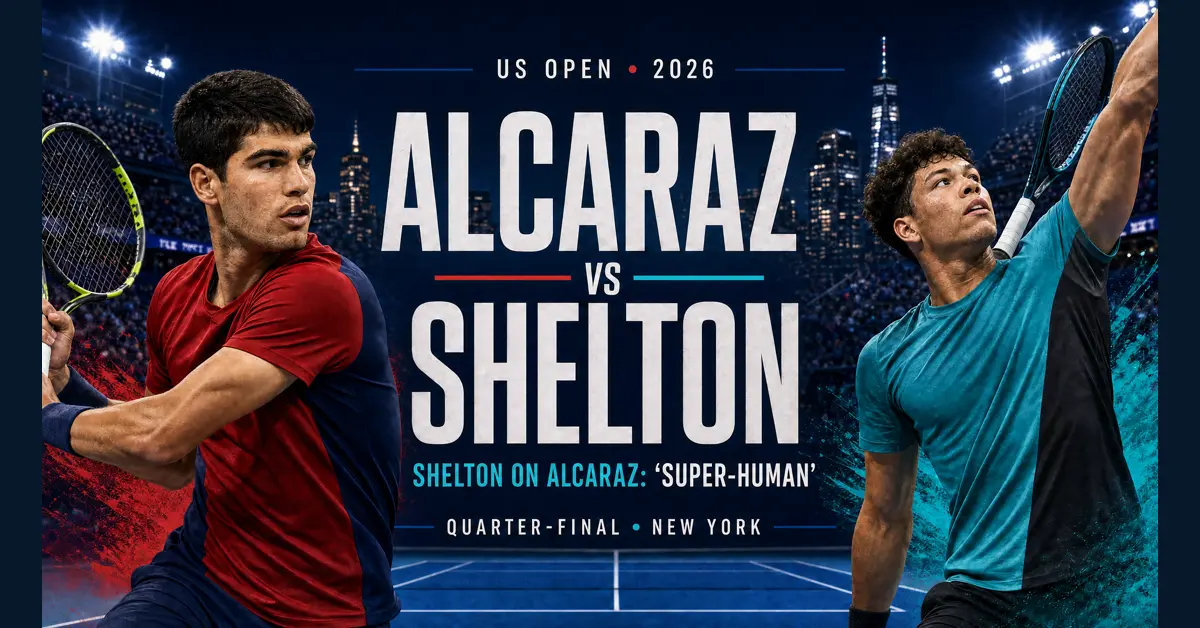
Five-Set Classic: Alcaraz Outlasts Shelton at US Open Quarterfinal
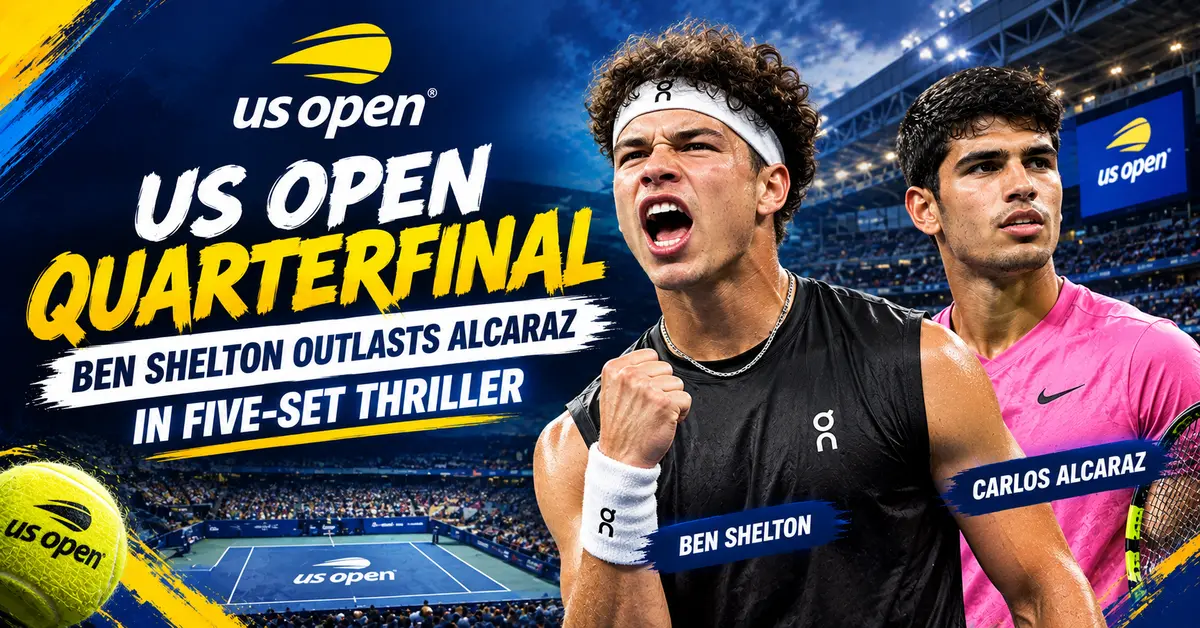
In a five-set US Open 2026 quarterfinal that extended till the crack of dawn on Wednesday morning in New York, Carlos Alcaraz defeated Ben Shelton using all of his Grand Slam techniques. Following a match that brought together the American 8th seed's powerful hitting with the Spaniard's consistent aggression and essential shots, the current champion, seeded 2nd, eventually won.
The match, which took place during the night at the Arthur Ashe Stadium, was postponed due to earlier races, yet it turned into one of the most controversial matches of the season, highlighting both the dynamic potential of younger athletes and the confidence of a competitor who has previously won several prestigious championships.
A Significant Late-Night Battle
The quarterfinal battle between Alcaraz, the defending champion, and Shelton, the top-ranked American contender, was expected to make headlines given its intensity. Both players were in good shape going into the game; Shelton had confidence in his powerful service and dominant delivery, while Alcaraz just won a single set to get to the final 8.
The opening of the evening session was supposed to take place at 7:00 PM ET, but due to delay in booking it began rather later than that. Regional time in New York guaranteed a peak-hour spot. It was about 11:00 PM ET, or around 8:30–9:00 AM IST on Wednesday in India, when Alcaraz and Shelton eventually got to the Arthur Ashe Stadium.
A crowded stadium waited long enough to experience what most people believed would be an intense and very tense battle, which further fuelled the level of tension.
Alcaraz Wins a Close First Set
The game lived up to the expectations right away. Alcaraz was driven far behind the starting point by Shelton's opening service, which proved an effective technique.
However, the Spaniard's comeback game, which is among his strongest performances on the tour, started to weaken, transforming standard service points into lengthy matches that revealed his flexibility and court-play strategy.
The opening round ended in a tie-breaker, as none of the players secured a major lead. Alcaraz's potential to score at key moments, make a step beyond the line of defence, change direction, and blend in a standard drop shot was highly important at this point.
In addition to building up an initial mental advantage and proving that Shelton's serve was not unstoppable in terms of pace, he won the match by 7–6.
The Second Set: Shelton Bounces Back
Shelton became more aggressive during the 2nd round after suffering a close defeat in the first. He started hitting Alcaraz's 2nd service with greater intensity, moving in to strike strong forehands and minimising games as much as he could, and he improved his initial-serve percentage.
Fans were already energised by the midnight energy, cheered after every massive smash or powerful forehand victory as the American's level of trust increased with each set. Later, the game changing moment arrived.
With a violent comeback, Shelton eventually defeated Alcaraz's defending service, winning a break point to take a 5–4 edge prior to playing the set at 6–4.
The storyline had changed when the match was tied at one set each, was it possible to have the junior American maintain this position and challenge the reigning champion?
Third and Fourth Sets : Energy Shifts and Increasing Stress
During the 3rd set, both players swapped breaks and looked for opportunities in the same way. Alcaraz started to change his speed and rely primarily on his reverse hit down the line.
He used strong topspin motion to force Shelton backward before dramatically straightening out a hit to take charge of a point. In an effort to control play and keep the Spaniard from relaxing into extensive serves, Shelton kept using his serve-and-forehand strategy.
During the 3rd set, Alcaraz closed out at 2-1 lead after managing to take an important break. Shelton, however, avoided fading like usual. He enhanced his service during the 4th set and played his greatest game under stressful circumstances, winning the set and tied the match at 2 sets in order to force a final.
Both the players were physically drained at this point. During lengthy games, they started moving a little slower than usual and made accidental mistakes. The chance for mistakes had decreased, which made every game a little challenging, even if the level of striking continued to be exceptional.
Visit for more: Shelton Calls Alcaraz 'Super-Human' Before US Open Quarter-Final
Fifth Set: Ambition and Experience
Shelton's genuine strength and confidence against Alcaraz's calmness and strategic capability in the final set defined the energy of the match. Both players held their serves effortlessly in the opening rounds, knowing that just one mistake could affect the outcome.
By this time, even though the crowd was not as big as it had been at the beginning, they were truly concentrated and responded to every move, extended fight, and the players' aggressive effort to finish a point early in the game.
Halfway through the final phase, the game-changing interval was reached. Alcaraz forced an extra point through a flawlessly executed inside-out forehand shot following an exhausting exchange in which the two players covered all of the surface of the arena.
Alcaraz took advantage of that opportunity, defeated Shelton to take a 4–3 point lead, and then maintained his own serving stroke to get into a single game of winning. In the following service game, Shelton struggled a return, forcing Alcaraz to give up, but the Spaniard's initial shot stayed solid when it was needed.
What to Expect in the Second-Half
Considering the winner of the Frances Tiafoe, Alex Michelsen quarterfinal awaits on the opposite end of the tie, Alcaraz's success keeps his championship defence on a solid foundation and opens up a highly competitive semifinals match.
Shelton's journey was already a success for team America, however fans might see this game as an unsuccessful attempt to get the number one seed more close or possibly carry a major shock.
The proper balance amongst the long-time winners and the upcoming generation of players remains important to a greater theme of the US Open 2026.
Alcaraz-Shelton matchups serve as an example of how the difference is getting smaller. American youths are becoming more than mere competitors, rather they are actual risks with their ability to put the top players in the world in difficult situations.
Also read: SkyExchGames